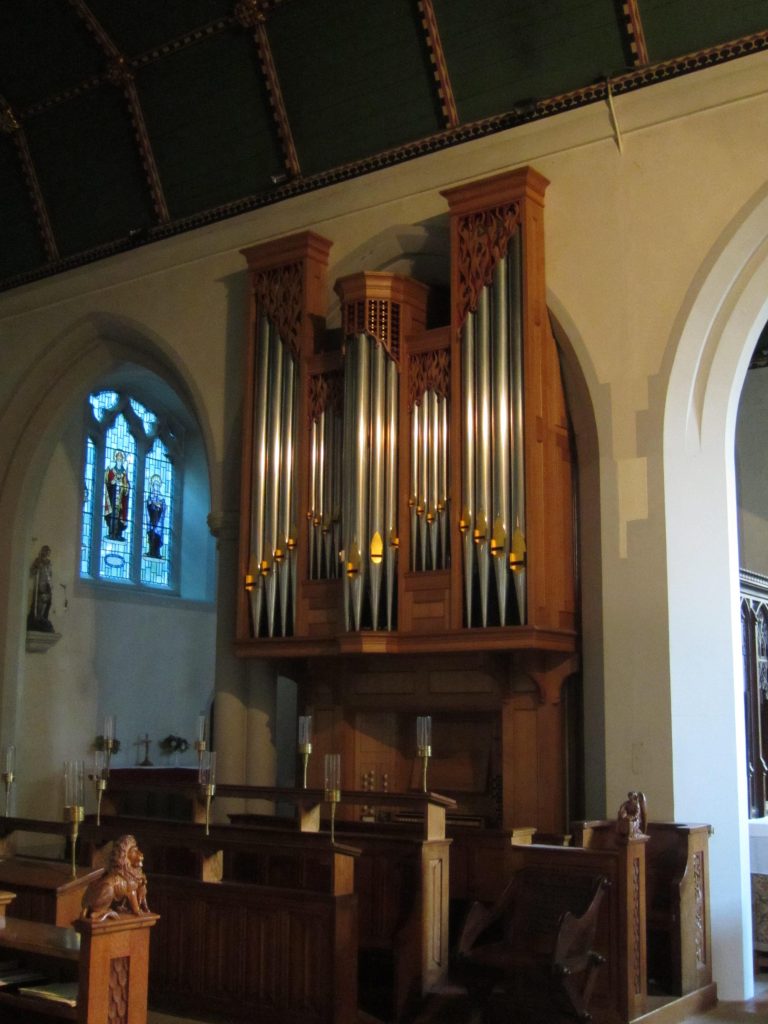
Between 4 October 2019 and 3 September 2021, Richard performed the known organ works of Johann Sebastian Bach (1685–1750) across twenty recitals to support the refurbishment of St Laurence Parish Church, Upminster. The church’s organ is a two‑manual mechanical‑action instrument by Kenneth Tickell, installed in 2003. Each recital lasted around one hour (with the exception of the final programme). The programmes are listed below, together with an article discussing the process of programming, preparing, and performing the works.
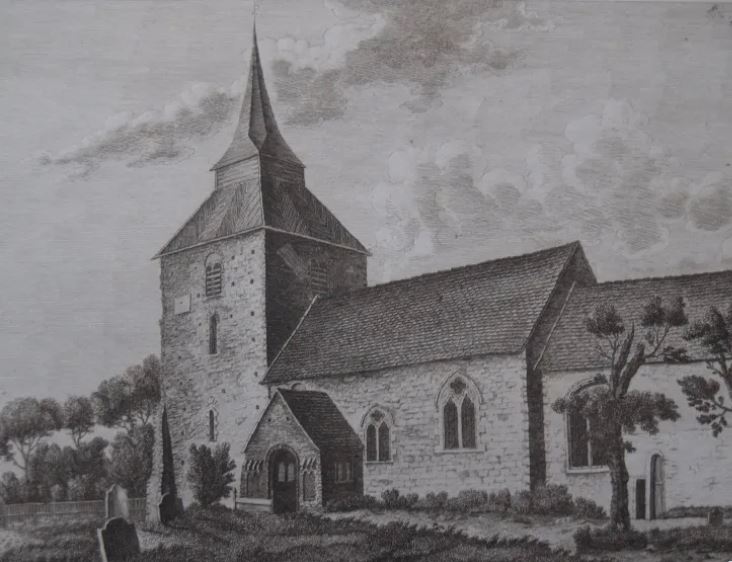
Engraving of St Laurence Parish Church, 1807.

Portrait by Elias Gottlob Haussmann, 1746.
4th October 2019 – I
Toccata, Adagio and Fugue in C major, BWV 564
An Wasserflüssen Babylon, BWV 653
Sonata no.1 in E flat, BWV 525
An Wasserflüssen Babylon, BWV 653b
Ein feste Burg ist unser Gott, BWV 720
Concerto in a minor (after Concerto in a minor, RV 522, by Antonio Vivaldi), BWV 593
1st November 2019 – II
Prelude and Fugue in C major, BWV 547
Nun danket alle Gott, BWV 657
Liebster Jesu, wir sind hier, BWV 730
Partite diverse sopra il Corale: Sei gegrüβet, Jesu gütig, BWV 768
Liebster Jesu, wir sind hier, BWV 731
Passacaglia in c minor, BWV 582
6th December 2019 – III
Fantasia and Fugue in c minor, BWV 537
Nun komm, der Heiden Heiland, BWV 699
Nun komm, der Heiden Heiland, BWV 599
Gottes Sohn ist kommen, BWV 600
Herr Christ, der ein’ge Gottes Sohn, BWV 601
Lob sei dem allmächtigen Gott, BWV 602
Lob sei dem allmächtigen Gott, BWV 704
Sechs Chorale von verschiedener Art
Wachet auf, ruft uns die Stimme, BWV 645
Wo soll ich fliehen hin, BWV 646
Wer nur den lieben Gott läβt walten, BWV 647
Meine Seele erhebt den Herren, BWV 648
Ach bleib bei uns, Herr Jesu Christ, BWV 649
Kommst du nun, Jesu, vom Himmel herunter, BWV 650
Sonata no.3 in d minor, BWV 527
20th December 2019 – IV
Meine Seele erhebt den Herren, BWV 733
Trio in d minor, BWV 583
Nun Komm, der Heiden Heiland, BWV 659
Nun Komm, der Heiden Heiland, BWV 660
Nun Komm, der Heiden Heiland, BWV 661
Gott, durch deine Güte, BWV 724
Gottes Sohn ist kommen, BWV 703
Lobt Gott, ihr Christen, allzugleich, BWV 732
Allein Gott in der Höh’ sei Ehr’, BWV 717
Allein Gott in der Höh’ sei Ehr’, BWV 711
Allein Gott in der Höh’ sei Ehr’, BWV 715
Prelude and Fugue in c minor, BWV 546
7th February 2020 – V
Prelude and Fugue in E major, BWV 566
Fantasia in C major, BWV 570
Schmücke dich, o liebe Seele, BWV 654
Sonata no.2 in c minor, BWV 526
Von Gott will ich nicht lassen, BWV 658
Concerto in d minor (after Concerto in d minor, RV 565, by Antonio Vivaldi), BWV 596
6th March 2020 – VI
Prelude and Fugue in b minor, BWV 544
Valet will ich dir geben, BWV 735
Christ lag in Todesbanden, BWV 718
Christus, der uns selig macht, BWV 620
Wer nur den lieben Gott läβt walten, BWV 690
O Mensch, bewein dein Sünde Groβ, BWV 622
Durch Adams Fall ist ganz verderbt, BWV 637
Es ist das Heil uns kommen her, BWV 638
Ich ruf zu dir, Herr Jesu Christ, BWV 639
Pièce d’orgue, BWV 572
1st May 2020 – VII
Prelude and Fugue in G major, BWV 550
Jesus Christus, unser Heiland, BWV 665
Fantasia super: Christ lag in Todesbanden, BWV 695
Wer nur den lieben Gott laβt walten, BWV 691
Hilf, Gott, daβ mir’s gelinge, BWV 624
Christ lag in Todesbanden, BWV 625
Jesus Christus, unser Heiland, BWV 626
Sonata no.4 in e minor, BWV 528
Erstanden ist der heilge Christ, BWV 628
Erschienen ist der herrliche Tag, BWV 629
Heut’ trumphieret Gottes Sohn, BWV 630
Christ ist erstanden, BWV 627
Prelude and Fugue in e minor, BWV 533
5th June 2020 – VIII
Concerto in C major (after a concerto by Johann Ernst), BWV 595
Fugue in g minor, BWV 578
Fantasia super: Komm, Heiliger Geist, BWV 651
Prelude and Fugue in A major, BWV 536
Komm, Heiliger Geist, BWV 652
Partite diverse sopra il Corale: Christ, der du bist der helle Tag, BWV 766
Prelude and Fugue in f minor, BWV 534
7th August 2020 – IX
Praeludium in a minor, BWV 569
Allein Gott in der Höh sei Ehr, BWV 662
Allein Gott in der Höh sei Ehr, BWV 663
Allein Gott in der Höh sei Ehr, BWV 664
Pastorella, BWV 590
Liebster Jesu, wir sind hier, BWV 706
Liebster Jesu, wir sind hier, (alio modo)
Prelude and Fugue in a minor, BWV 543
4th September 2020 – X
Toccata and Fugue in F, BWV 540
Herr Jesu Christ, dich zu uns wend, BWV 709; 726
Partite diverse sopra il Corale: O Gott, du frommer Gott, BWV 767
Vater unser im Himmelreich, BWV 737
Toccata and Fugue in d, BWV 538
2nd October 2020 – XI
Prelude and Fugue in C, BWV 545
Ach Gott und Herr, BWV 714
Jesus, meine Zuversicht, BWV 728
Da Jesus an dem Kreuze stund, BWV 621
Wir danken dir, Herr Jesu Christ, BWV 623
Sonata no.5 in C major, BWV 529
Fugue in b minor (on a theme by Archangelo Corelli, from Op.3 no.4), BWV 579
Trio super: Herr Jesu Christ, dich zu uns wend, BWV 655
In dich hab ich gehoffet, Herr, BWV 640
In dich hab ich gehoffet, Herr, BWV 712
Prelude and Fugue in G major, BWV 541
6th November 2020 – XII
Fantasia in c minor, BWV 562
O Lamm Gottes, unschuldig, BWV 618
Partite diverse sopra il Corale: Ach, was soll ich Sünder machen, BWV 770
Christ, du Lamm Gottes, BWV 619
Ach Gott, vom Himmel sieh darein, BWV 741
Concerto in C (after the “Grosse Mogul” Concerto in D major, RV 208, by Antonio Vivaldi) BWV 594
18th December 2020 – XIII
In dulci jubilo, BWV 729
Nun freut euch, lieben Christen gmein, BWV 734
Vom Himmel hoch, da komm ich her, BWV 701
Vom Himmel hoch, da komm ich her, BWV 738
Wir Christenleut habn jetzund Freud, BWV 710
Canonic variations: Vom Himmel Hoch, da komm ich her, BWV 769
Vom Himmel hoch, da komm ich her, BWV 700
Puer natus in Bethlehem, BWV 603
Gelobet seist du, Jesu Christ, BWV 604
Der Tag, der ist so freudenreich, BWV 605
Vom Himmel hoch, da komm ich her, BWV 606
Vom Himmel kam der Engel Schar, BWV 607
In dulci jubilo, BWV 608
Prelude and Fugue in D, BWV 532
8th January 2021 – XIV
Prelude and Fugue in C, BWV 531
Gelobet seist du, Jesu Christ, BWV 722
Gelobet seist du, Jesu Christ, BWV 697
Lobt Gott, ihr Christen, allzugleich, BWV 609
Jesu, meine Freude, BWV 610
Christum wir sollen loben schon, BWV 696
Christum wir sollen loben schon, BWV 611
Wir Christenleut, BWV 612
Herr Christ, der einig Gottes Sohn, BWV 698
Fantasia super: Jesu, meine Freude, BWV 713
Helft mir Gottes Güte preisen, BWV 613
Das alte Jahr vergangen ist, BWV 614
In dir ist Freude, BWV 615
Mit Fried und Freud ich fahr dahin, BWV 616
Herr Gott, nun schleuβ den Himmel auf, BWV 617
Herr Gott, dich loben wir, BWV 725
5th February 2021 – XV
Concerto in G major (after a concerto by Johann Ernst), BWV 592
O Lamm Gottes, unschuldig, (no BWV)
Vater unser im Himmelreich, BWV 636
Erbarm dich mein, o Herre Gott, BWV 721
Herzlich tut mich verlangen, BWV 727
Fantasia in b minor, BWV 563
Wenn wir in höchsten Nöten sein, BWV 641
Wer nur den lieben Gott läβt walten, BWV 642
Alle Menschen müssen sterben, BWV 643
Ach wie nichtig, ach wie flüchtig, BWV 644
Jesus Christus, unser Heiland (alio modo), BWV 666
O Lamm Gottes, unschuldig, BWV 656
Allabreve in D major, BWV 589
19th March 2021 – XVI
Prelude and Fugue in g minor, BWV 535
Canzona, BWV 588
Duetto I, BWV 802
Duetto II, BWV 803
Duetto III, BWV 804
Duetto IV, BWV 805
Fugue in c minor, BWV 575
Valet will ich dir geben, BWV 736
Pedalexercitium, BWV 598
Fantasia and Fugue in g minor, BWV 542
7th May 2021 – XVII
Prelude and Fugue in a minor, BWV 551
Fantasia in C major, BWV 573 (fragment) – completed by Hermann Keller
Fugue in c minor, BWV 574
Wo soll ich fliehen hin, BWV 694
Komm, Gott Schöpfer, heiliger Geist, BWV 631
Komm, Gott Schöpfer, heiliger Geist, BWV 667
Herr Jesu Christ, dich zu uns wend, BWV 632
Prelude and Fugue in d minor, BWV 539
Liebster Jesu, wir sind hier, BWV 633
Liebster Jesu, wir sind hier, BWV 634
Dies sind die heilgen zehn Gebot, BWV 635
Toccata and Fugue in d minor, BWV 565
4th June 2021 – XVIII
Praeludium in G major, BWV 568
Der Tag, der ist so freudenreich, BWV 719
Wir Christenleut BWV, 1090
Das alte Jahr vergangen ist, BWV 1091
Herr Gott, nun schleuβ den Himmel auf, BWV 1092
Herzliebster Jesu, was hast du verbrochen, BWV 1093
O Jesu, wie ist dein Gestalt, BWV 1094
O Lamm Gottes unschuldig, BWV 1095
Christe, der du bist Tag und Licht, BWV 1096
Ehre sei dir, Christe, der du leidest Not, BWV 1097
Wir glauben all an einen Gott, BWV 1098
Aus tiefer Not schrei ich zu dir, BWV 1099
Allein zu dir, Herr Jesu Christ, BWV 1100
Ach, Gott und Herr, BWV 714
Ach Herr, mich armen Sünder, BWV 742
Durch Adams Fall ist ganz verderbt, BWV 1101
Du Friedefürst, Herr Jesu Christ, BWV 1102
Erhalt uns, Herr, bei deinem Wort, BWV 1103
Wenn dich Unglück tut greifen an, BWV 1104
Prelude and Fugue in e minor, BWV 548
2nd July 2021 – XIX
Prelude and Fugue in c minor, BWV 549
Jesu, meine Freude, BWV 1105
Gott ist mein Heil, mein Hilf und Trost, BWV 1106
Jesu, meines Lebens Leben, BWV 1107
Als Jesus Christus in der Nacht, BWV 1108
Ach Gott, tu dich erbarmen, BWV 1109
O Herre Gott, dein göttlich Wort, BWV 1110
Nun laβt uns den Leib begraben, BWV 1111
Christus, der ist mein Leben, BWV 1112
Ich hab mein Sach Gott heimgestellt, BWV 1113
Herr Jesu Christ, du höchstes Gut, BWV 1114
Herzlich lieb hab ich dich, o Herr, BWV 1115
Was Gott tut, das ist wohlgetan, BWV 1116
Alle Menschen müssen sterben, BWV 1117
Machs mit mir, Gott, nach deiner Güt, BWV 957
Werde munter, mein Gemüte, BWV 1118
Wie nach einer Wasserquelle, BWV 1119
Christ, der du bist der helle Tag, BWV 1120
Sonata no.6 in G major, BWV 530
3rd September 2021 – XX
ClavierÜbung III
Praeludium pro Organo pleno, BWV 552i
Kyrie
Kyrie, Gott Vater in Ewigkeit, BWV 669
Christe, aller Welt Trost, BWV 670
Kyrie, Gott heiliger Geist, BWV 671
Kyrie, Gott Vater in Ewigkeit (manualiter), BWV 672
Christe, aller Welt Trost (manualiter), BWV 673
Kyrie, Gott heiliger Geist (manualiter,) BWV 674
Gloria
Allein Gott in der Höh sei Ehr (manualiter), BWV 675
Allein Gott in der Höh sei Ehr, BWV 676
Allein Gott in der Höh sei Ehr (manualiter), BWV 677
The Ten Commandments
Dies sind die heilgen zehen Gebot, BWV 678
Dies sind die heilgen zehen Gebot (manualiter), BWV 679
The Creed
Wir glauben all an einen Gott, BWV 680
Wir glauben all an einen Gott (manualiter), BWV 681
The Lord’s Prayer
Vater unser im Himmelreich, BWV 682
Vater unser im Himmelreich (manualiter), BWV 683
Baptism
Christ, unser Herr, zum Jordan kam, BWV 684
Christ, unser Herr, zum Jordan kam (manualiter), BWV 685
Penitence
Aus tiefer Not schrei ich zu dir, BWV 686
Aus tiefer Not schrei ich zu dir (manualiter), BWV 687
Communion
Jesus Christus, unser Heiland, der von uns den Zorn Gottes wandt, BWV 688
Jesus Christus, unser Heiland (manualiter), BWV 689
Fuga a 5 con pedale pro Organo pleno, BWV 552ii
——————–
Vor deinen Thron tret’ ich hiermit, BWV 668
Programming, preparing and performing the organ works of Johann Sebastian Bach
From October 2019 to September 2021, I fulfilled a long-held ambition of mine: to learn and perform all of Johann Sebastian Bach’s known organ works. There were three main reasons why I finally took on this mammoth task. Firstly, I wanted to raise funds for the restoration of St Laurence Parish Church in Upminster, where I was Director of Music until April 2020. Secondly, I wanted to create a musical framework for myself at a time when I had just become a father. Thirdly, I wanted to satisfy my curiosity about Bach’s organ works that rarely see the light of day.
While such a project is not unique, the experience of each individual who chooses to undertake it will be distinct. In the rest of this article, I will share my insights on programming, preparing and performing a cycle of Bach’s music. I will also focus on the mental and physical pressures of performing such a large volume of music in a relatively short space of time.
The series was planned to cover 20 recitals over two years, all to be performed on the diverse 2-manual, 24-stop instrument at St Laurence by Kenneth Tickell. Reflecting on the planning stages, I found the programming the most daunting element. When a recitalist is engaged to perform, artistic awareness plays an important role in creating a balanced programme that suits the occasion and the instrument on which they are playing. However, these challenges are accentuated when preparing twenty separate programmes of works by the same composer. Finding a good balance in each programme certainly stretched the mind in more ways than one.
The Bach-Werke-Verzeichnis (BWV), a catalogue of Bach’s compositions compiled by Wolfgang Schmieder[1], was first published in 1950. The works are not listed chronologically, but by genre, which is why earlier works might appear with a higher BWV number than later works. Although the catalogue contains many works that are certainly by Bach, it also includes some that are spurious. One of the more well-known examples, which continues to divide opinion, is the Toccata and Fugue in d minor, BWV 565[2]. This is just one instance where scholarly decision making plays an important role when deciding on which pieces should be included.
Further, updated BWV catalogues have appeared as more discoveries about Bach’s music have been made, but Schmieder’s first collation was without doubt one of the major milestones in Bach scholarship, with its contents affording all musicians the opportunity to form a more rounded understanding of Bach’s output.
A total of 227 organ works were featured during the series and were initially categorised as follows:
– 31 toccatas/preludes/fantasias and fugues, including standalone movements.
– Six sonatas in trio form.
– Five arrangements of string concertos.
– Four chorale partitas.
– 172 chorale-based works, excluding the partitas.
– There are nine works that don’t fit into any of these categories.
As these figures show, the majority of Bach’s organ compositions were chorale-based. After setting provisional dates for the concerts, the programming process began with each individual work being placed into groups (such as those listed above) and rough timings being noted down. Taking the liturgical seasons of the church year into consideration, all the chorale-based works were divided into subgroups pertaining to the points in the calendar for which they were written.
Advent
Nun komm, der Heiden Heiland, BWV 699
Meine Seele erhebt den Herren, BWV 733
Gottes Sohn ist kommen, BWV 703
Christmas
In dulci jubilo, BWV 729
Kanonische Veränderungen: Vom Himmel Hoch, da komm ich her, BWV 769
Der Tag, der ist so freudenreich, BWV 605
Epiphany/New Year/Feast of the Purification
Christum wir sollen loben schon, BWV 696
Mit Fried und Freud ich fahr dahin, BWV 616
Herr Gott, nun schleuβ den Himmel auf, BWV 617
Lent and Holy Week
Erbarm dich mein, o Herre Gott, BWV 721
Christus, der uns selig macht, BWV 620
Durch Adams Fall ist ganz verderbt, BWV 637
Easter
Christ ist erstanden, BWV 627
Erstanden ist der heilge Christ, BWV 628
Erschienen ist der herrliche Tag, BWV 629
Ascension
Heut’ trumphieret Gottes Sohn, BWV 630
Pentecost
Fantasia super: Komm, Heiliger Geist, BWV 651
Komm, Heiliger Geist, BWV 652
Komm, Gott Schöpfer, heiliger Geist, BWV 667
Miscellaneous chorales
Herr Jesu Christ, dich zu uns wend, BWV 632
Dies sind die heilgen zehn Gebot, BWV 635
Wenn wir in höchsten Nöten sein, BWV 641
The chorales were then divided again to align with the concert dates. For church musicians, liturgical awareness is important when selecting repertoire for the church year. To that end, similar guidelines were adopted here. For instance, rather than presenting all 46 chorales from the Orgelbüchlein in one concert in August, it was more sensible to perform them at times that were more appropriate to the melodies on which each prelude was based. These and other similar works were then framed by larger pieces, with additional pieces interspersed where necessary.
Two groups of chorale-based works were excluded from this premise. The Neumeister collection, comprising 33 chorales, is a more recent discovery and forms part of a larger compilation of works found in a manuscript book belonging to Johann Gottfried Neumeister[3]. The second group comprises the third part of Bach’s Clavierübung. Whether or not it was intended to be performed this way, Clavierübung III follows the structure of the Lutheran Mass. This structure is bookended by the substantial Prelude and Fugue in E flat, BWV 552.
Although Clavierübung III lasts for just over an hour and a half, it made no sense to split up the collection. The only exception was the Duetti BWV 802–805[4], which were moved elsewhere. The Neumeister chorales were split into two programmes, with preludes, fugues and a trio sonata opening and closing the two recitals. The aim was to assemble 20 concerts lasting around 55–60 minutes, which would be enough time to deliver an engaging and varied programme without risking audience fatigue. With the exception of the final programme of the series, which is made up entirely of Clavierübung III, this was achieved.
Trial and error followed. Some chorales formed neat groups, while others required more consideration. Once the smaller groups had been formed and an idea of where the chorales would fall had been established, the larger free works could be incorporated. The key signatures for these were useful in determining where to programme them. For instance, minor keys were deemed more appropriate for Advent and Lent, while major keys were considered better suited to Christmas and Easter. Length and style were also important factors, and I spent a lot of time listening to unfamiliar pieces in order to make decisions about where to place them within the series.
Once a general overview had been achieved, the programmes were tweaked. Some were a little too long or short, and some chorale preludes were better suited to another programme. Many individual chorales had to be moved around during the latter stages of programming, which was frustrating and time-consuming at times. Ultimately, however, I felt that a well-balanced representation of Bach’s organ works had been achieved.
Every musician has their own process for approaching new repertoire. Before the series began, I had probably played just over half of Bach’s organ works, which helped to alleviate some of the pressure, considering there was to be roughly one concert a month to prepare for. It was inevitable that some pieces would need to be completely revised, particularly those that I had learnt during my student years.
At the very start of the learning process, I made a conscious decision to broadly follow historic principles, particularly with regard to registration and fingering. Instruments during Bach’s lifetime had shorter manual keys than those we have today. This would have required careful use of the thumb to avoid distorting the relaxed hand position or smudging surrounding notes.
A good example can be found in the first movement of Bach’s Sonata in E flat, BWV 525. Bars 34-35 are known to be awkward, but by following a historically informed finger pattern in the left hand, less pressure is placed on the wrist, which in turn helps to promote relaxation during what is a highly precarious moment.

Similar moments can be found throughout Bach’s keyboard works. However, by studying and developing consistency in fingering, a logical process soon emerges. Although the music itself is highly varied, many shapes and patterns reappear, meaning that certain fingerings can often be reused.
Careful consideration is also required when it comes to pedalling, given the various quirks of a historic pedal board. Most have short black notes and a limited compass as standard, but some also have wider gaps between the white notes. Imitating certain historic pedalling techniques on modern pedal boards with excellent touch resistance can be challenging. While I aimed to be as authentic as possible, the musical end result was of primary importance to me. As such, a more prominent use of the heel was occasionally required. Studying orchestral music from the Baroque period can provide useful guidance on note grouping and line shaping, which may influence one’s choices of fingering and pedalling.
It was difficult at times to fit the series around life itself. Other work and personal commitments often took priority, so it was of great benefit to develop a system for preparing programmes and learning them effectively. Before the series began, I told myself that I should always prepare two concerts in advance of any given performance. This allowed for some much-needed breathing space and gave the music time to settle naturally. With this system in place, the first two concerts of the series (in October and November) had been accounted for by the end of August 2019. While some concerts consisted of pieces I had played before, most of the programmes contained largely new works. Overall, I found that taking a measured approach to learning over a sustained period of time worked best for me.
Once the pieces had been learnt and the series programmed, it was time to perform. Although this was probably the easiest part, it presented challenges, both mental and physical. Some pieces will simply slip off the tongue, but things are never so straightforward with Bach. His music is so cleverly crafted and intricate that, no matter how well one knows a piece, the unexpected can always happen, whether through erroneous fingering that throws a well-learned pattern off course or fatigue. It is easy to focus so intensely on a single piece of Bach that little attention is left for the rest of the programme. As mentioned earlier, I found that allowing a piece to settle during the preparation process for an extra amount of time led to a more enjoyable performance.
I took pleasure in offering short, spoken introductions for the five concerts that were performed in front of an audience before the first lockdown. This gave audience members who were not so familiar with Bach’s music the chance to engage with the programmes, and gave me the opportunity to do more research. Since the first lockdown in March 2020, all concerts have had to be moved online in the form of pre-recorded recitals on YouTube. With the pressure to prepare programmes for performance by a certain date reduced, it became possible to prepare and record many programmes in advance of the advertised performance dates. It is of great regret to me that only the first five concerts could be performed live because of the pandemic, but moving them online offered a valuable opportunity to share the series with a much wider audience.
Regardless of how many pieces of Bach I had played previously, the process of preparing the organ works was long and time-consuming. It sometimes felt like a heavy weight on the shoulders, but once the summit of a project like this finally comes into view, the realization that it has all been worth it becomes very apparent. Furthermore, of course, completing such a project does not signal the very end. It is only the very beginning. There is so much to learn about Bach and his organ music; probably more than can be learnt in a lifetime, but playing through these wonderful pieces serves to open up another avenue on one’s journey studying his life and work.
Richard Brasier, 2021
[1] Wolfgang Schmieder (1901-1990) was a German music librarian, and musicologist.
[2] BWV 565 is quite unique in comparison to Bach’s other compositions from the Arnstadt period (1703-1707). In the absence of a manuscript in Bach’s hand, debates surrounding the composer (Bach, a contemporary?) and instrument for which it was written (organ, or violin and then transcribed?) continue.
[3] Johann Gottfried Neumeister (1757-1840). Organist, copyist and Professor of German.
[4] The Duetti, BWV 802-805 appear towards the conclusion of Clavierübung III. Bach’s intention might have been for them to be used with the shorter chorale movements of the same, but they are also effective when performed in concert as a suite.